
5 Calm-Down Tools Every Kid Can Try (And Where to Start)
· 3 min read · Updated
If your kid melts down at 5 PM and "calm down" only makes it worse, you're not parenting wrong — you're missing the toolkit.
Most kids don't have words for what's happening in their body when they're flooded. Their nervous system is doing one thing, their thinking brain is doing another, and the gap between them is the meltdown. Telling them to use words is a big ask in that moment. Showing them a tool can be easier.
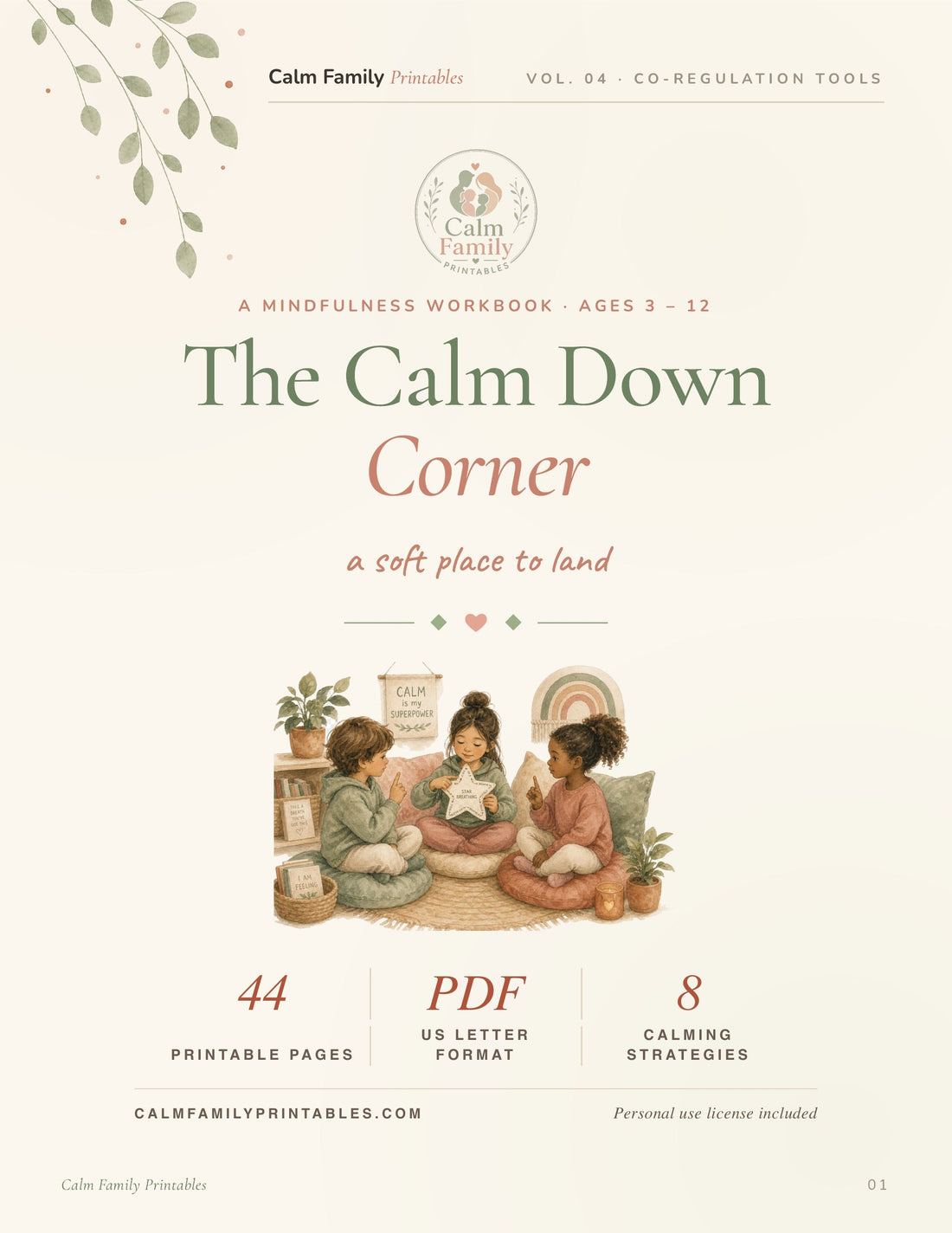
With our own kids in mind, we built the Calm Down Corner Workbook around five categories of tools. These aren't new ideas. Most parents just never get taught them. Here are the five, what they do, and one technique from each you can try this afternoon.
1. Breathing tools
Why they work:Slow breathing can be a gentle way of telling the body "I'm safe right now." It gives your child something steady to do while the big feeling passes.
Try this — Dragon Breaths:Have your child breathe in through their nose, then breathe out their mouth like warm dragon air. Three rounds. Encourage a long, slow breath out each time.
Younger kids often love the dragon framing — pretend play makes practising feel like a game.
2. Body movement tools
Why they work:When feelings are too big to think about, movement gives them somewhere to go. Pushing, shaking, and squeezing give those big feelings a safe way out.
Try this — Wall Pushes:Hands flat on a sturdy wall, push for 10 slow counts, then step back and shake the hands out. Repeat 2–3 times. Good for energy that's still in the body — frustration, restlessness, tantrum buildup.
It looks almost too simple. It's worth a try.
3. Sensory calm tools
Why they work:Gentle sensory input — something cool, or a firm hug if your child wants one — can be comforting when words are too much. Worth trying with sensitive kids and kids who find talking hard in the moment.
Try this — Cold Water Reset:Wash hands with cool water, splash the cheeks, or rest cool hands on the back of the neck. Take one slow breath. Try again.
The cool feeling gives the body something new to notice. Try it next time bedtime starts to spiral.
4. Focus tools
Why they work:When the mind is racing, giving it something specific to look at, name, or count can act like an anchor.
Try this — 5-4-3-2-1:Have your child name 5 things they can see, 4 they can touch, 3 they can hear, 2 they can smell, 1 they can taste. Handy for worried moments, racing thoughts, can't-fall-asleep moments.
Older kids especially love this one — it feels grown-up.
5. Self-talk tools
Why they work:Big feelings shrink kids' vocabulary. They can't reach the words because their brain is busy elsewhere. Pre-loaded phrases give them somewhere to land — and make them feel less alone.
Try this — One simple phrase:Teach your child to say (or whisper, or write): "My body needs a reset."
That's it. No big mantra. No "I am calm." Just a phrase that names what's happening without making it a moral failure. With practice, they may start using it without you prompting.
Where to start
If you only do one thing this week: pick one category, one technique, and practice it with your child when they're already calm.
The reason most kids don't use calm-down tools mid-meltdown is that they're trying to learn the tool and regulate the body at the same time. That's a lot to ask of anyone. Practice when calm; deploy when flooded.
Want 8 calming tools in a printable workbook?
The full Calm Down Corner Workbook has 8 named calming tools, plus a feeling-intensity scale, body clues checklist, parent scripts for inviting and supporting, and a calm corner setup guide.
44 pages. Designed for kids 3–12. Instant PDF download. Print only the pages you need.
Get the workbook →
Part of the Calm Family Library — five printable workbooks in one bundle.