
How to Help a Child Who's Scared of the Dentist
· 6 min read · Updated
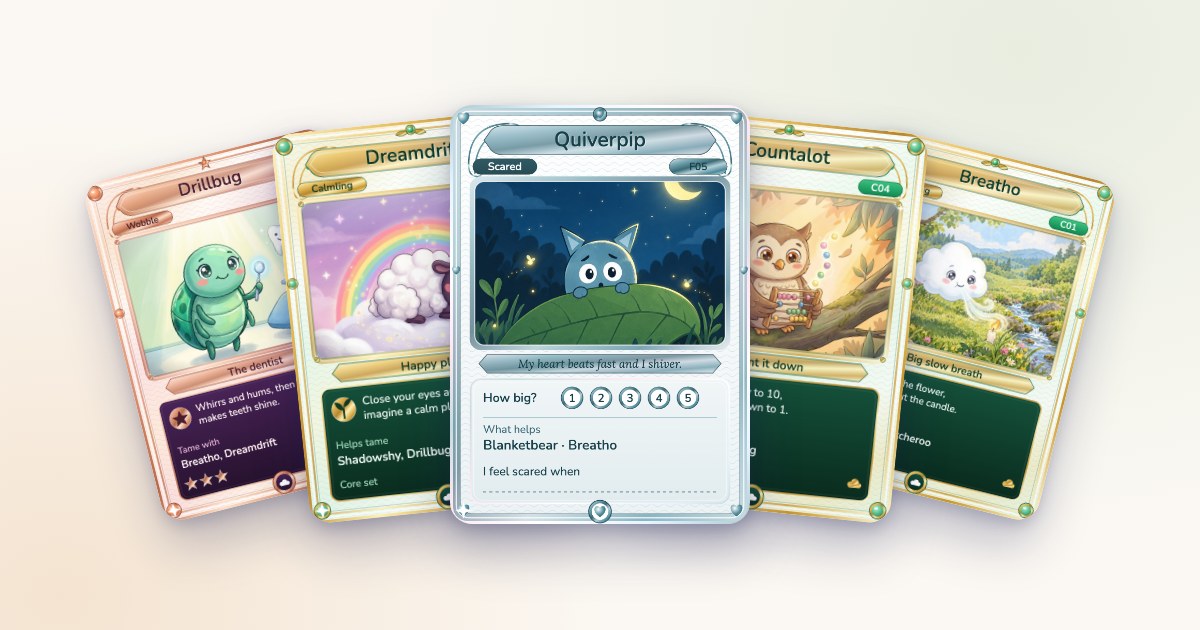
Lots of children feel wobbly about the dentist. The chair tips back, a bright light shines in their eyes, and someone in a mask leans in close. Then come the buzzing, whirring and slurping sounds from tools they can't see. From a small person's point of view, that is a lot. The good news is that there's plenty a parent can do before, during and after a visit to make it feel familiar and manageable. Most of it costs nothing, and you can start tonight.
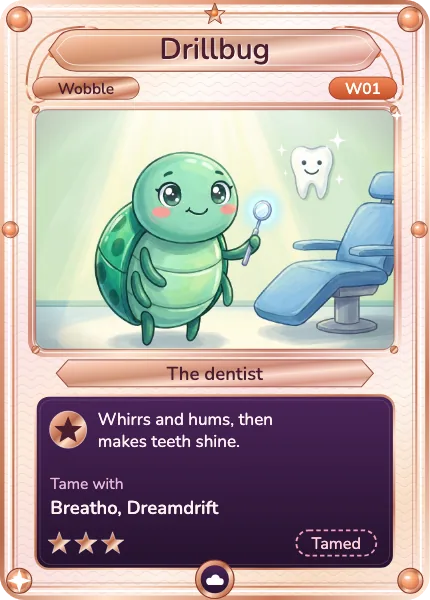
In our Calmlings card game, the dentist is a Wobble called Drillbug. The card says Drillbug "Whirrs and hums, then makes teeth shine." That one line does a lot of work. It names the noisy part, and it tells your child how the story ends. We'll use Drillbug and the Calmlings that tame it as examples below, but every idea here works with or without the cards.
Why is my child scared of the dentist?
Usually it isn't one thing. It's a bundle of small, strange things that all arrive at once:
- Lying back. Being tipped backwards with a grown-up above you can feel very exposed.
- Not seeing what's happening. Everything happens inside their own mouth, where they can't watch.
- Sounds and sensations. Whirring, buzzing, the suction straw, a gritty polish, a cold rinse.
- Not knowing how long. Young children have no real sense of "only a few more minutes".
- Borrowed worries. A sibling's story, a cartoon, or a grown-up's own nerves.
Once you can see the bundle, you can untie it one piece at a time.
How do I prepare my child for the dentist?
Play dentist at home
If you only try one idea, make it this one. Lie your child back on the couch with their head on a cushion. Shine a torch into their mouth, hold up a small mirror and count their teeth out loud. Then swap. They get to be the dentist and count your teeth, or a teddy's. Keep it silly and short, and play it a few times in the week before the visit. That way, lying back and opening wide is a game they already know.
Practise "open wide" with a count
Ask your child to open wide while you count slowly to ten. Countalot's move fits perfectly here: "Count slowly to 10, then back down to 1." Once they can hold their mouth open for a count, they have a way to measure time in the chair.
Borrow the dental team's gentle words
Many dental teams have their own kind names for their tools, like a tooth counter or a water straw. Ring ahead and ask what they call things, then use those words at home. Try to leave out words like hurt, pain and needle. Even "it won't hurt" can plant the idea that it might.
Tell the story of the visit
Many children cope better when they know the order of things. Walk through it simply: we'll drive there, sit in the waiting room, the chair goes back, the dentist counts your teeth, then we go to the park. Planda's move is exactly this: "See what comes first and what comes next." If your child likes pictures, a simple first-then board helps, and our guide to using a visual schedule shows how to make one.
Choose the time and tell the team
Book a time when your child is usually at their best. For many families that's the morning, and ideally not straight after a missed nap. When you book, mention that your child is nervous. Many dental teams are happy to slow down, explain each step, or start with a short visit where your child simply rides the chair up and down.
 CalmlingsCountalotUnlock every cardUnlock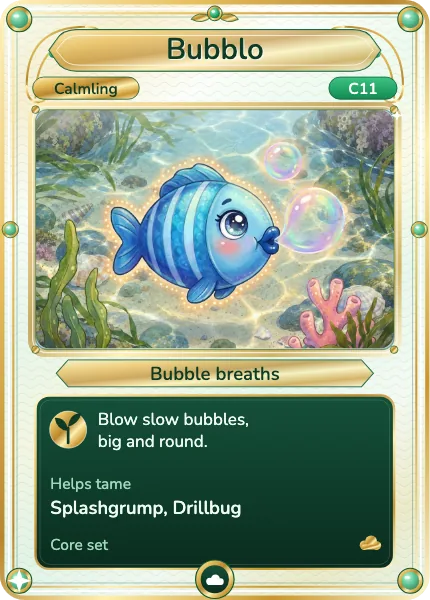
 CalmlingsFidgetfoxUnlock every cardUnlock
What should I say to a child who is scared of the dentist?
Name the feeling first, then offer a plan. Try something like: "You're feeling scared about the dentist. That makes sense. Let's pick a calming move to take with us."
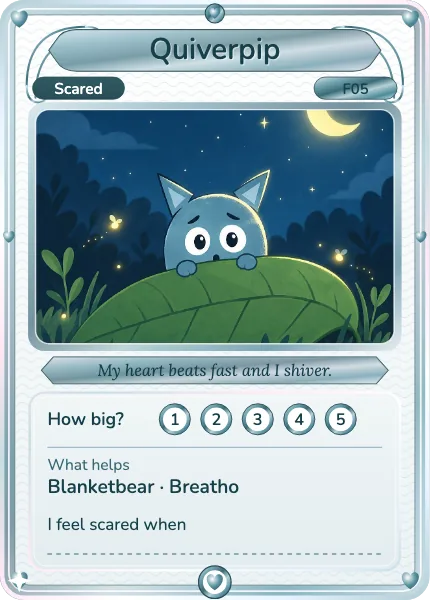
It helps to give the feeling a shape. Our Feelings Friends cards each have a "How big? 1 to 5" scale and a body clue. Quiverpip, the scared Feelings Friend, says "My heart beats fast and I shiver." Fretling, who is worried, says "My tummy feels full of butterflies." Ask your child which one feels closest, and how big it is today. If a 4 on Tuesday becomes a 2 by Friday, notice it out loud. There's more on this in our guide to helping kids with big feelings.
A few phrases that tend to land well:
- "The dentist is a tooth helper. Their job is to keep your teeth strong."
- "You can put your hand up if you need a little pause." (Agree this signal with the dentist first.)
- "You don't have to feel brave to be brave. You can feel wobbly and still do it."
Bravely's card gives children a short line to hold on to: Say it strong: "I can do hard things." Say it together in the car on the way.
How can I help my child stay calm in the dentist's chair?
Pick one or two calming moves before you go and practise them at home, so they're ready when your child needs them. On the Drillbug card, the two Calmlings that tame it are:
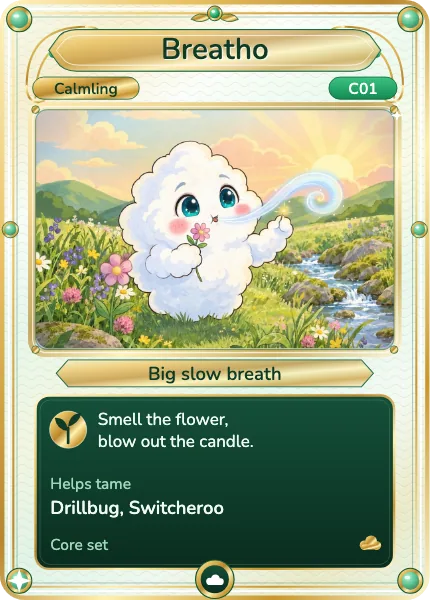
- Breatho, Big slow breath: "Smell the flower, blow out the candle." It's a good one for the waiting room and for the little breaks between steps. You can practise together on our free Breathe with Breatho page, where a cloud grows as you breathe in and shrinks as you breathe out.
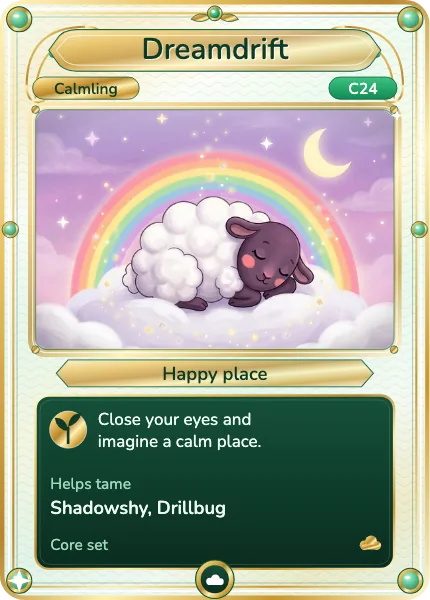
- Dreamdrift, Happy place: "Close your eyes and imagine a calm place." Bright lights make closed eyes feel good anyway. Before the visit, ask your child to describe their calm place in detail: the beach, Nan's garden, a spaceship. Then you can gently remind them of it in the chair.
Other ideas that can help in the chair:
- Busy hands. Fidgetfox's move is "Keep your hands busy with a fidget toy." Ask the team if a small squishy toy is okay to hold.
- Bubble breaths in the waiting room. Bubblo's move is "Blow slow bubbles, big and round." Pretend bubbles are fine, and there's no bottle to spill.
- A hand to hold. Or a hand resting on their foot. Stay where your child can feel you, and let the dentist do the talking.
- Counting. Count along with each step so there's always a clear end in sight.
- Sunglasses and a teddy. Some clinics offer sunglasses for the bright light. A soft toy can sit on your child's tummy and "watch".
If it all gets too much on the day, that's okay. Stopping early and coming back for a shorter visit isn't a failure. It's often how confidence gets built.
 FeelingsFretlingFree in the chart packFree
 FeelingsPuffkinUnlock every cardUnlock
What to do after a dentist visit
How you close the visit shapes how your child remembers it.
- Praise the effort, specifically. "You kept your mouth open while the dentist counted. That was hard, and you did it."
- Plan something small and nice. A trip to the park or a favourite book together. Keep it modest, so the day isn't all about the reward.
- Talk about it later. At bedtime, ask what the tricky bit was and what helped. Your child might like to draw it.
- Check the feeling again. Puffkin, the proud Feelings Friend, says "My chest feels big and warm." Some children love finishing the day on that card.
Keep the good work going with a relaxed brushing routine at home. Our Bedtime Bundle includes a Brush teeth card for the evening routine. If toothbrushing itself is a battle, the Complete Collection has a Wobble just for that, Brushbristle: "Foamy, tickly and very minty."
If your child's fear is very big, doesn't ease over time, or gets in the way of the dental care they need, have a chat with your dentist or GP about what else might help.
A simple plan for the week before
- Play dentist on the couch two or three times.
- Practise "open wide" for a slow count of ten.
- Pick one calming move and practise it every day.
- Tell the story of the visit: first this, then that.
- Mention your child's nerves when you book.
- Plan something small and nice for afterwards.
If you'd like the cards for your plan, Drillbug and every Calmling and Feelings Friend in this post are in the Calmlings Starter Set (US$5, 61 print-at-home cards). Print them, pop Drillbug and your child's chosen Calmling in your bag, and let them hold the cards in the waiting room. You can see every card in the Calmlings gallery.