Free feelings chart and cards
Free
Thirteen feelings faces with a 1 to 5 scale, plus six feelings cards and three Calmlings.
See the free packEmotion cards are picture cards that help a child name a feeling. Ours are the Feelings Friends: 26 creatures, one for each feeling, each with a 1 to 5 meter to show how big it is and two Calmlings to try.
Free: enter your email and the download opens straight away.
Your download opens on the next page. Signing up also joins our emails: a few tips for using our printables and news about our printables and Calmlings cards. Unsubscribe any time.
26 Feelings Friends, one creature for each feeling. Cards marked Free are in the free feelings chart pack. Cards marked Starter Set come in the US$5 Starter Set, with the free ones. All 26 come in the Complete Collection.
 FeelingsBeamlethappyFreeFree in the chart pack
 FeelingsDroplosadFreeFree in the chart pack
 FeelingsFizzwickangryFreeFree in the chart pack
 FeelingsFretlingworriedFreeFree in the chart pack
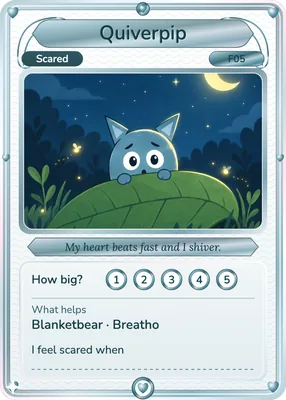 QuiverpipscaredFree
 FeelingsZippityexcitedStarter SetUnlock every card
 FeelingsPuffkinproudStarter SetUnlock every card
 FeelingsHushlinglonelyStarter SetUnlock every card
 FeelingsRippletcalmFreeFree in the chart pack
 FeelingsKnotsyfrustratedStarter SetUnlock every card
 FeelingsBlushbyembarrassedStarter SetUnlock every card
 FeelingsWowzlesurprisedStarter SetUnlock every card
 FeelingsGreenwishjealousStarter SetUnlock every card
 FeelingsYawnletiredUnlock every card
 FeelingsHumdrumboredUnlock every card
 FeelingsGigglesnortsillyUnlock every card
 FeelingsGlowheartgratefulUnlock every card
 FeelingsDroopsydisappointedUnlock every card
 FeelingsMuddlepuffconfusedUnlock every card
 FeelingsTuckawayshyUnlock every card
 FeelingsWhirlwhelmoverwhelmedUnlock every card
 FeelingsCuddlewinklovedUnlock every card
 FeelingsBoldsproutbraveUnlock every card
 FeelingsOuchlinghurtUnlock every card
 FeelingsMendlysorryUnlock every card
 FeelingsPeeperoocuriousUnlock every card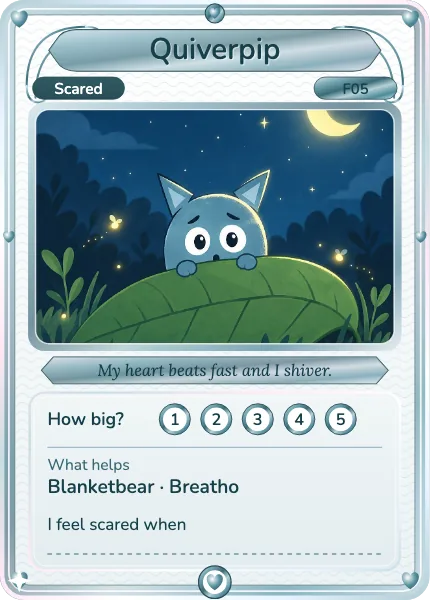
Take Quiverpip, the Feelings Friend for scared. Every Feelings Friend card has the same five parts.
Print them on thin card. If you laminate a set, a dry-wipe pen lets your child fill in the meter and the line again and again.
A few simple games. None of them needs more than the cards and a few minutes.
For more games that practise naming feelings, see our emotions activities for kids.
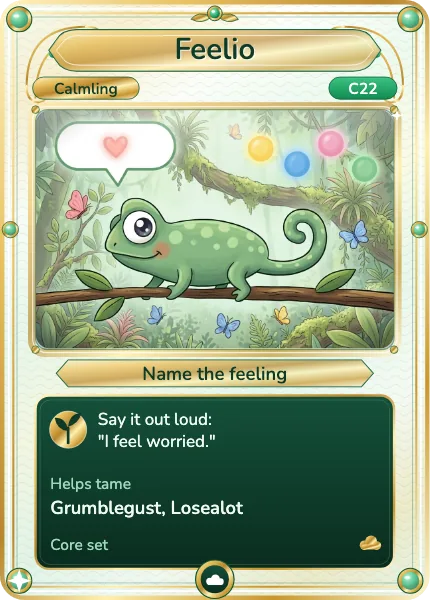
A Feelings Friend names the feeling. A Calmling is one thing to try next. Feelio sits in between: its card asks your child to say the feeling out loud. Then turn to the Calmlings on the feeling’s card: Quiverpip points to Blanketbear and Breatho.
 FeelioName the feelingSay it out loud: "I feel worried."
 CalmlingsBlanketbearCosy blanketRest under a soft, cosy blanket.Free in the Halloween pack
 BreathoBig slow breathSmell the flower, blow out the candle.
 StompoStomp it outStomp, jump or push the wall to reset.
There are 53 Calmlings in all. Meet every card or see them sorted by type on our coping skills cards page.
More ideas for teachers: Calmlings for classrooms.
Both card sets open in the Calmlings app on your phone and iPad, and come with the Printable Pack of A4 and US Letter PDFs to print at home. The free pack is printable only. The free chart pack has six Feelings Friends. The Starter Set has 13, and the Complete Collection has all 26, with every other card.
Thirteen feelings faces with a 1 to 5 scale, plus six feelings cards and three Calmlings.
See the free pack61 cards to begin with: Calmlings, Wobbles and Feelings Friends, plus the Tamed! seals.
Get the starter setSecure checkout by Polar, our payment partner. Checkout shows your price in your currency (US$, A$, £, €, C$ or NZ$); tax is included or added as your country requires.
All 1000 cards. New Calmlings, Wobbles and Feelings Friends cards are added to the Complete Collection as we make them.
Buy every card for US$29.99Secure checkout by Polar, our payment partner. Checkout shows your price in your currency (US$, A$, £, €, C$ or NZ$); tax is included or added as your country requires.
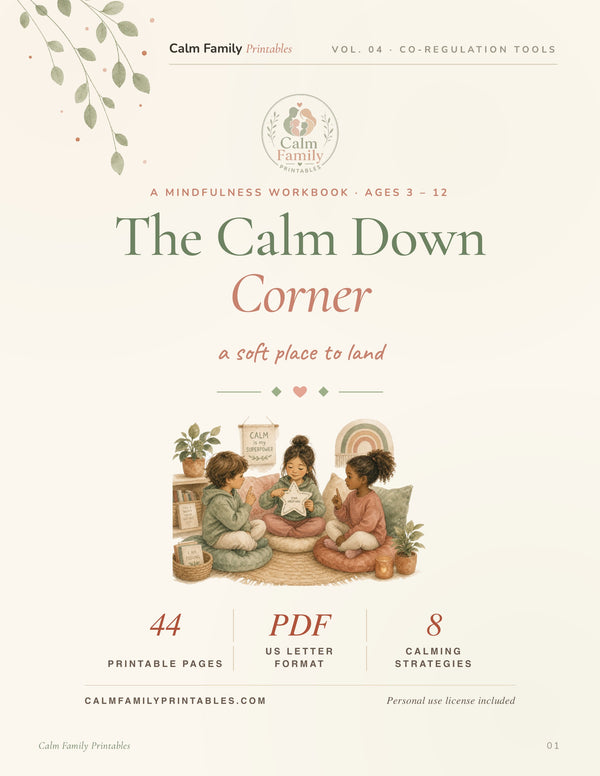
The Calm Down Corner Workbook has a feelings wheel with 19 emotions to point to, plus breathing pages and a daily feelings journal. It is one printable PDF of 44 pages, US$14.
26 in all: happy, sad, angry, worried, scared, excited, proud, lonely, calm, frustrated, embarrassed, surprised, jealous, tired, bored, silly, grateful, disappointed, confused, shy, overwhelmed, loved, brave, hurt, sorry and curious. The Starter Set has the first 13, and the Complete Collection has every one.
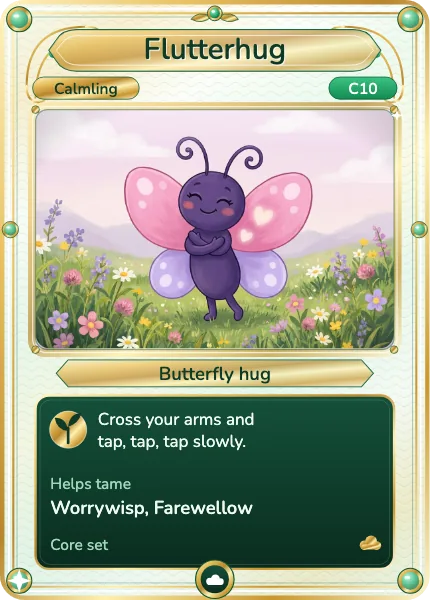
Yes. The free feelings chart pack has six Feelings Friends cards and three of the Calmlings their cards name (Breatho, Flutterhug and Stompo), plus a “How are you feeling today?” chart. Enter your email and the download opens straight away.
Yes. Print as many copies as your class needs. Every download has A4 and US Letter PDFs, with the card backs lined up for double-sided printing. See Calmlings for classrooms.
Yes. Emotion cards, feelings cards and feelings flashcards all mean picture cards that name a feeling. Ours add a 1 to 5 meter and two calming moves to try.
No. Calmlings cards are educational tools, not therapy or medical advice. Every child is different, so use the cards in whatever way works, alongside the doctors, therapists and teachers who know them.
Calmlings cards are educational tools, not therapy or medical advice. Every child is different, so use the cards in whatever way works, alongside the doctors, therapists and teachers who know them.
Updated .
Printable ideas for big feelings at home and in class. The free packs download as soon as you enter your email.
Every Calmling: 53 calming moves sorted by type.
Take a look →What to put in a box or bag for big feelings, and what to print for it.
Take a look →Where to put it, what goes in it and how to start, at home or in class.
Take a look →Nine calming moves on picture cards, plus a “What can I do?” poster.
Take a look →Thirteen feelings faces with a 1 to 5 scale, plus six feelings cards and three Calmlings.
Take a look →