
15 Sensory Calm Down Ideas for Kids to Try at Home
· 7 min read · Updated
Some kids can be talked down from a big feeling. Many can't, at least not straight away. When a child is upset, words often bounce off. What gets through first is something they can feel: a squeeze, a heavy blanket, a crunchy apple, a slow swing.
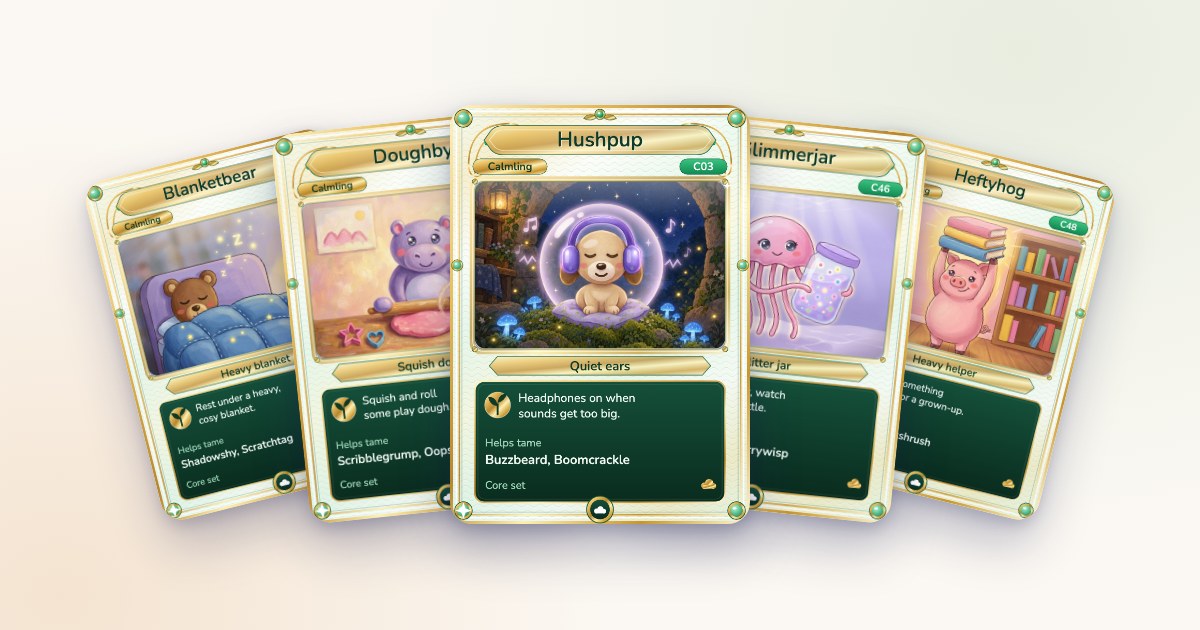
That's the idea behind sensory calm-down activities. They use the body, not the talking, to help a child settle. Once the body is calmer, there's room to talk about what happened. Below are 15 ideas you can try at home, most with things you already have. Each one matches a card from our Calmlings game, where a Calmling is a calming move and a Wobble is a tricky moment it helps a child "tame".
What are sensory calm-down activities?
They're simple activities built around the senses: pressure, movement, touch, sound, smell and chewing. Pushing, carrying and squeezing give muscles something to work against. Slow rocking and swinging give the body a steady rhythm. Soft textures, warm water and a favourite smell can feel safe and familiar.
None of these is magic, and none works for every child every time. They're tools to try. Notice what your child likes, and keep the ones that help.
How do I know which sensory ideas will suit my child?
Watch what your child already does when they're wound up. Their body often shows you what it's looking for.
- Crashing, jumping or pushing? Try heavy work and bouncing.
- Chewing sleeves, pencils or hair? Try the crunch and chew ideas.
- Hands over ears, or hiding? Try quiet ears and a cosy, dim spot.
- Fiddling with everything? Try busy hands and play dough.
- Looking for hugs and snuggles? Try a cosy blanket or a soft toy.
Try new ideas when your child is already calm, so they feel familiar before a hard moment. Then, when things get big, offer two to choose from.
What is heavy work for kids, and how can we do it at home?
Heavy work just means using big muscles to push, pull, carry or bounce.
1. Heavy blanket
Blanketbear says, "Rest under a heavy, cosy blanket." A cosy quilt over the legs and tummy can feel like a big, gentle hug. Keep it light enough that your child can push it off easily, never cover their face, and use it for resting while awake rather than for sleep.
2. Heavy helper
Heftyhog says, "Carry something heavy for a grown-up." Kids love a real job. Carrying the shopping, pushing the washing basket or returning an armful of books to the shelf all count. It's also handy for taming Aisleaboo, the busy-shops Wobble.
3. Bounce it out
Bouncebun says, "Bounce on a big ball ten times." Sit on an exercise ball with feet flat on the floor, and count the bounces together. Stay close while they bounce. No ball? Ten jumps on the spot does a similar job.
4. Gentle swing
Swingaling says, "Swing slowly back and forth." The key word is slowly. A calm, even swing at the park or rocking together in a big chair can be very settling. Fast, high swinging is better saved for playtime.
 CalmlingsBlanketbearFree in the Halloween packFree
 CalmlingsHeftyhogUnlock every cardUnlock
 CalmlingsBouncebunUnlock every cardUnlock
 CalmlingsSwingalingUnlock every cardUnlock
What sensory activities help kids with busy hands?
5. Busy hands
Fidgetfox says, "Keep your hands busy with a fidget toy." A squishy ball, a hair tie or a pipe cleaner all work, and older children who no longer put things in their mouths might like a smooth stone in a pocket. Small, quiet and always in the same place is best.
6. Squish dough
Doughby says, "Squish and roll some play dough." Homemade dough is quick to make with flour, salt, water and a little oil. Roll it into snakes, squash it flat, poke holes in it. Doughby helps tame Oopsling (making mistakes) and Scribblegrump (homework), so a small tub on the homework table is worth a try.
7. Water play
Splishfin says, "Pour and splash some warm water." A washing-up bowl, a few cups and jugs, and a towel on the floor is all it takes. Pouring from one cup to another can hold a little one's attention for ages. Always stay with young children around water.
8. Soft stroke
Pettlepup says, "Stroke a pet or a soft toy gently." A calm pet, a soft toy or a fluffy cushion all work. Pettlepup helps tame Gatejitter, the school drop-off Wobble, so a tiny soft keyring on the school bag might help at the gate.
 CalmlingsFidgetfoxUnlock every cardUnlock
 CalmlingsDoughbyUnlock every cardUnlock
 CalmlingsSplishfinUnlock every cardUnlock
 CalmlingsPettlepupUnlock every cardUnlock
What can I give a child who chews everything, or needs calm on the go?
Plenty of kids chew sleeves and pencils when they're worried or bored. Giving the mouth a better job is often easier than asking them to stop.
9. Crunch and chew
Munchkin says, "Crunch a snack or chew something safe." Crunchy foods your child already eats safely, like apple slices, carrot sticks or rice crackers, work well. Munchkin helps tame Waitwhile (waiting) and Yuckmunch (new foods), so a crunchy snack before a long wait is a good habit.
10. Chew time
Chompy says, "Chew a chewy toy or a chewy snack." A chew toy made for kids, or something chewy like a bagel crust, gives the jaw a long, steady workout. Choose foods that suit your child's age and have them sit down to eat. If constant chewing on clothes or objects worries you, mention it to your GP or your child's doctor.
The next two are for hands, and they're handy when you're out.
11. Finger squeeze
Rubbadub says, "Squeeze each finger, one at a time." Go from thumb to little finger, then swap hands. Your child can do it on their own anywhere, even in a waiting room. Rubbadub helps tame Needlenose (getting a needle) and Snipsnap (the haircut).
12. Warm hands
Warmpaws says, "Rub your hands fast, then hold them still." Rub until the palms feel warm, then rest them on cheeks or tummy and notice the warmth. It's quick, quiet and needs nothing at all.
 CalmlingsMunchkinUnlock every cardUnlock
 CalmlingsChompyUnlock every cardUnlock
 CalmlingsRubbadubUnlock every cardUnlock
 CalmlingsWarmpawsUnlock every cardUnlock
What helps a child who is overwhelmed by noise?
Loud, bright, busy places can feel like too much all at once. These three ideas give ears, eyes and noses something gentler to focus on.
13. Quiet ears
Hushpup says, "Headphones on when sounds get too big." Ear defenders, or headphones with nothing playing, can make a busy room feel smaller. Keep a pair in the car or your bag. Hushpup helps tame Boomcrackle (loud noises) and Buzzbeard (haircuts).
14. Glitter jar
Glimmerjar says, "Shake the jar, watch the glitter settle." To make one, fill a clear plastic bottle with warm water, add a good squeeze of clear glue and a spoonful of glitter, then glue the lid on tightly. Watching the glitter drift down gives busy eyes one slow thing to follow. Say, "Let's wait until it settles," and breathe together while you watch.
15. Calm smell
Scentle says, "Smell something nice, like a flower." Any gentle smell your child likes can work: orange peel, a sprig of rosemary, or a drop of vanilla on a cotton ball in a small jar. Let your child choose. Keep strong oils off skin and out of reach of little ones.
 CalmlingsHushpupUnlock every cardUnlock
 CalmlingsGlimmerjarUnlock every cardUnlock
 CalmlingsScentleUnlock every cardUnlock
How do I make a sensory calm-down kit?
A calm-down kit is just a box or bag your child can reach, filled with a few of their favourite sensory tools. Keep it in your calm corner, and pack a mini version for outings.
- A small fidget
- A little tub of play dough
- Headphones or ear defenders
- A glitter jar
- A soft toy
- A chew toy, or a little note that says "Ask for a crunchy snack"
- A small jar with a cotton ball and a smell they like
Swap things over now and then so it stays interesting. Our guide to making a calm down kit has a longer list, with a calming move for each thing and the printables to go with it. For more on where to put it, see how to set up a calm down corner and five calm-down tools every kid needs.
When is the best time to use sensory calm-down ideas?
Before. If you know a tricky moment is coming, plan a move in first. Heavy work before the shops. A crunchy snack before a wait. Headphones in the bag before a party.
During. Talk less. Offer two choices, like "Blanket or dough?" and do it with them if they'd like.
After. Once your child is calmer, help them name the feeling. Our Feelings Friends cards ask "How big? 1 to 5". Ask before a move and again after. Seeing the number change can help your child notice what works for their body. If breathing is one of their favourites, our free Breathe with Breatho page is a nice one to try together.
Where can I find these sensory cards?
All 15 ideas in this post are Calmlings cards. Blanketbear, Munchkin, Fidgetfox, Hushpup and Warmpaws are in the Starter Set. If you'd like all 15, plus the Wobbles and Feelings Friends they pair with, they're in the Calmlings Complete Collection, with 1000 cards in all. You can see every card in the card gallery.
Start small. Pick two or three ideas that match what your child already does, try them on a calm day, and see which ones they reach for. The best sensory calm is the one your child chooses.